Tuesday, October 16, 2012

Building Immunity............Healthy Lifestyle Choices

     Herbert Spencer coined the phrase ‘Survival of the Fittest’ describing Darwin’s theory of Natural Selection. If we are not ‘Fit’, then we are susceptible to infections, autoimmune disorders or even chronic disorders, all of which impact our longevity and health – plain and simple. Transforming our ‘Fitness’ is critical to build immunity. The first half of being ‘fit’ comes from making the right lifestyle choices.

Lifestyle modifications that really work for year-round immune health:
  • Get enough sleep – lack of sleep causes stress which in turn leads to lowered resistance.
  • Reduce unnecessary exposure to pollution (wear a surgical mask or simply use a cloth while driving), chemicals (including household cleaning agents) - use gloves while cleaning. Explore natural, non-toxic D-I-Y options.
  • Exercise regularly – 30 minutes to one hour, 4 to 5 times a week. Intensive training for more than 2 hours a day, however, makes you more vulnerable to infection.
  • Get enough sun – at least 20 minutes sun exposure per day till your skin acquires a pinkish hue is required for our body to produce Vitamin D.
  • Limit or avoid alcohol consumption and kick the smoking habit.
  • Lose weight if you need to – maintain your ideal body weight and lead an active lifestyle.
  • Meditate, practice Pranayama, pursue a hobby or passion - in other words, lower stress to boost your immunity.
               Having said all this, you will suffer from infections whether you have a strong immune system or not, although much less frequently. The advantage is the recovery time. Watch your body bounce back to normal in a remarkably short time with lesser discomfort and intensity of symptoms. 


This article was published in 'Life in Adyar', October 6, 2012.

Building Immunity.............The Small Things Matter


     Building immunity should start early. Breastfeeding for the first 6 months to a year of life is the surest way to ensure your child is protected even from common allergies. Allow children to be exposed in a safe way to bacteria so that they develop immunity from a young age. Don’t sacrifice basic hygiene but let your kids play outside or in sand / soil- encourage them to explore nature and the outdoors. 

     This way, they are exposed to a bacterial environment which challenges their immune system, necessitating a response. The body thus learns to defend itself and is alert and ready to protect itself in the future. Don’t use antibiotics for small illnesses even if your paediatrician prescribes them – unnecessary use of these medicines leads to bacteria mutating into new resistant strains making it tougher for the body to fight them. Avoid antibacterial soaps for the same reason.

     Interestingly, there is a link between emotional wellness and immunity. This is especially true for children. Kids’ immunity is susceptible to stress. Those being raised in a loving environment have higher levels of self-esteem and well being so they fall sick less often. Research shows that, people who hold on to anger and resentment tend to fall sick frequently. The same goes for single people, individuals without a strong social network and people who are going through depression.

     Why this connection? The simple reason is all the warm fuzzy stuff is good for your immunity too. Being married or in a loving relationship, being a parent, being part of a close-knit community, experiencing the love and support of your family helps your health. Hope this gives you incentive to address and resolve sources of stress and create the all important work – life balance! 

This article was published in 'Life in Adyar', September 29, 2012.

Building Immunity..........Introduction


I wrote a 4 part series on this subject for Life in Adyar.......

     Imagine having your own personal army, responsible for your safety and survival, ready at a moment’s notice....did you think of a team of bodyguards? Well, this system is literally guarding your body. It is called your Immune System and your health and ability to fight infections, toxins, poisons and even cancerous cells depends on it.

     There is a lot of new research taking place on the subject of immunity especially on what enhances and suppresses it. This is a hot topic in the light of new, virulent types of infections like swine flu and the hanta virus. Ordinary, existing bacteria and viruses are mutating into new strains which are resistant to our traditional drugs. This phenomenon is mainly due to the widespread and indiscriminate use of antibiotics to treat even virus infections like cold and influenza (against which they are completely ineffective). In this scenario, the best option that you have is to keep your immune system working optimally.

     While your skin, saliva, mucosal lining of nasal passages and digestive system, stomach acid, tears, etc. are the first barriers to any foreign body, this Natural Immunity also consists of antibodies and protective cells that are already present in your body from the time of birth. Inflammation is also an example of this – a slight swelling when a mosquito bites or at a cut in skin actually protects you from bacteria at the site.

     A secondary line of defence called Acquired Immunity consists of more complex cells and systems to fight foreign bodies or ‘antigens’ as they are called. This type of immunity ‘learns’ from previous attacks and infections and enables the body to protect itself from future assaults and is associated with our Lymphatic System. A well known example is having chicken pox as a child and then being protected from developing it again throughout life. Vaccines work on the same principle but not at 100% effectiveness.

    During the rains, the risk of developing infections is at the highest because the water we drink might be contaminated. During this season, avoid eating out frequently and especially from roadside vendors to prevent infections like typhoid, gastroenteritis and cholera. Urinary tract and fungal infections of the feet are common. Keep your feet dry and change socks frequently. For urinary tract infections barley water is the way to go (beer doesn’t help). Stagnant water leads to mosquitoes breeding – dengue and malaria incidence is higher during this season. Ask civic authorities to clear any standing water in your area.

     It is critical to maintain a dry, hygienic environment at home to prevent being affected. Focus on kitchen hygiene and cleaning of fresh food stuffs before preparation. Wash hands with ordinary soap regularly. Don’t play too much in the rain – jumping in puddles is definitely not recommended. Stay out of the pool as far as possible since it is water-borne infections that are predominant.

    The monsoon doesn't have to be a time of caution, keep the above practices in place and if you get wet occasionally, don’t worry too much about coming down with an infection. Watch out for the next in the series – The Small Things Matter.   

This article was published in 'Life in Adyar', September 22, 2012.

Saturday, September 15, 2012

Common names of whole grains


Thought it fit to post the common names of the whole grains we use at home (since I've been going on and on about them). This info is widely available and sourced from the 'Nutritive Value of Indian Foods' as well as the internet. You can view relevant images on Google search - just type in any of these names. These grains are best if grown organically. They literally require less water for cultivation and you'd be doing the Earth a big favour if you demand chemical free foods. Visit your local organic store for more info.

I clicked the first 4 pics of millets...... the rest, courtesy Google Images.


ENGLISH  / WHOLE GRAIN
HINDI
KANNADA
TELUGU
MALAYALAM
TAMIL
PEARL MILLET
BAJRA
SAJJE
SAZZALU
KAMBU
KAMBU
FINGER MILLET
MADUA
RAGI
RAGULU
MOOTHARI
KELVARAGU
FOXTAIL MILLET
KAKUM
NAVANE
KORRA
THINA
THINAI
LITTLE MILLET
KUTKI
SAAME

CHAMA
SAAMAI
KODO MILLET
KODRA
HARAKU
ARIKALU
VARAGU
VARAGU
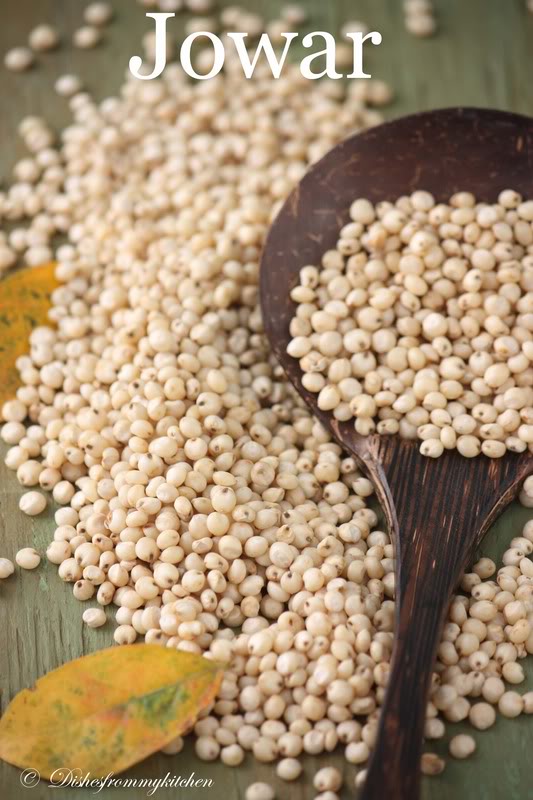
SORGHUM
JUAR
JOLA
JONNALU
CHOLAM
CHOLAM
MAIZE
MAKA
MUSKINA JOLA

MOKKA JONNALU
MAKKA CHOLAM


MAKKA CHOLAM
Foxtail Millet
Pearl Millet
Little Millet
Kodo Millet
Maize
Ragi

Red Pulao with Sprouts Raita

     This pulao looks weird. No doubt about it. We're used to Basmati rice grains emitting a wonderful aroma (this one does too though). The white colour of the rice mingling with colourful veggies. Well, try this recipe out and the flavour sells itself. Sure it tastes different from white rice but it's just different not worse or better. Stop comparing red or brown rice with white - they will never taste the same but these whole grains will always be more nutritious. Again, a snapshot of the magazine article shows you what the pulao can look like.

INGREDIENTS FOR PULAO:

Red Rice – 2 cups
Carrots – 200 g
Cauliflower – 100 g
Green Peas (shelled) – 100 g
Sweet Corn (off the cob) – 100 g
Onions (chopped for garnishing) – 1 medium
Red chilli powder – 1 tsp
Salt – to taste

SEASONING – Oil- 1 tbsp, mustard, jeera, cinnamon, bay leaves, nutmeg, turmeric, ginger, garlic and curry leaves.

METHOD:

1] Because red rice takes longer to cook, do this first either in a rice or pressure cooker with just enough water for a fluffy texture (usually 1:2.5 of water is enough).

2] Lightly boil the cleaned cauliflower, carrots, green peas and corn in some water with a pinch of salt and turmeric for ten minutes. Afterwards, drain the excess water (read tip).

3] Remove the rice from the cooker, drain excess water (if any) and leave it to cool.

4] In a kadai, heat the oil and add the chopped onions and all the other seasoning ingredients with the red chilli powder. You can vary the amount of each of these spices depending on which flavour you want should dominate.

5] Once the onions turn golden brown, add the boiled vegetables, salt and mix. Cook for 5 mins, add the red rice and fold everything in together lightly so as not to end up with a gooey mash.

6] Serve hot. Roasted Punjabi pappads also go well with this dish.

Serves: 4                              Cooking Time: 1 hour

INGREDIENTS FOR RAITA:

Sprouts – mixture of whole methi, moong and channa sprouts – 2 cups
Curd – 2 cups
Tomatoes (finely chopped) – 3 small
Onion (optional, finely chopped) – 1 medium
Jeera – 1 tsp
Coriander – for garnish

METHOD:

1] Mix the sprouts, tomatoes and onion together with curd.

2] Garnish with jeera and coriander leaves.

Preparation Time: 5 mins

Nutrition Tips –
  • Retain the drained vegetable stock to use in other items like soup or rasam (you can even store it or drink it plain) since it is full of nutrients.
  • To increase this recipe’s protein content (pulao) you can add sprouts or boiled grams in addition to veggies.
  • Try adding tofu, marinate in lemon juice and add it to the seasoning before mixing in the veggies.


  This recipe combo was published in Parent Circle, August, 2012.